Support Us: Please visit our sponsors

.Mac (Apple Computer, Inc.)
Showing posts with label US civil war. Show all posts

Saturday, November 29, 2008

The War Prayer

B. Thomas Cooper - Editor


"O Lord our Father,
our young patriots, idols of our hearts, go forth to battle –
be Thou near them! With them – in spirit – we also go forth from the sweet peace of our beloved firesides to smite the foe. O Lord our God, help us to tear their soldiers to bloody shreds with our shells; help us to cover their smiling fields with the pale forms of their patriot dead; help us to drown the thunder of the guns with shrieks of their wounded, writhing in pain; help us to lay waste their humble homes with hurricanes of fire; help us to wring the hearts of their unoffending widows with unavailing grief; help us to turn them out roofless with their little children to wander unfriended the wastes of their desolated land in rags and hunger and thirst, sports of the sun flames of summer and the icy winds of winter, broken in spirit, worn with travail, imploring Thee for the refuge of the grave and denied it – for our sakes who adore Thee, Lord, blast their hopes, blight their lives, protract their bitter pilgrimage, make heavy their steps, water their way with tears, stain the white snow with the blood of their wounded feet! We ask it, in the spirit of love, of Him Who is the Source of Love, and Who is the ever-faithful refuge and friend of all that are sore beset and seek His aid with humble and contrite hearts. Amen."

Mark Twain
1905

B. Thomas Cooper - Editor


Sound and Recording - Sound Foundation - National Newswire - The Infinite Echo - Impeachment Now! - Skate the Razor -
Skate the Razor Blog - blogment

Wednesday, June 11, 2008

When Cotton Was King

B. Thomas Cooper - Editor


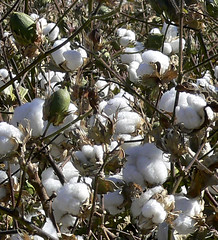
White blossomed, white bolled, short staple cotton. It is the stuff of which dreams are made, and wars are fought. If you think the US Civil War was about the abolition of slavery, perhaps you may wish to reconsider.

Cotton Field
White Bolled, Short Staple Cotton

During the late 1850’s and right up through the US Civil War, Cotton was indeed an economic powerhouse, not just in the southern United States, but throughout the world. “Dare not make war on cotton,” presaged Senator James Henry Hammond in 1858. “No power on earth dares make war upon it. Cotton is King."

Economists agreed with the Senator from South Carolina. Cotton was the driving force behind a period of great prosperity in the south, creating an elitist upper class dependant on the success of the crop. Slavery in the US was on the wane until Eli Whitney patented the cotton gin in 1779. Unfortunately, the success of his invention brought new demand for slave labor. By 1804, the cotton crop was eight times greater than in the previous decade, and the demand for slaves was rising.

This new Southern aristocracy resulted from the ownership of land and slaves and the surest way to obtain both was to grow cotton. Its impact was long reaching. New roads were constructed and businesses sprang up along endless processions of wagons hauling the crop to various ports. Cotton’s new kingdom extended well into Texas and north another six hundred miles up the Mississippi River valley. Rest assured, where there was cotton, there was money to be made. Even smaller farms, who generally planted only for sustenance, often set aside a few acres of cotton for trading.

Caught in diplomacy.

By 1860, the South was annually exporting two-thirds of the worlds cotton, generating hundreds of millions of dollars in revenue. During the Antebellum Period, cotton was indeed king, dominating international relations with the Confederacy, a policy referred to by many as “cotton diplomacy.” This period would see the South in a new light. However, James Henry Hammond was far from accurate in his assessment. Cotton would rule under a pall of darkness, perhaps the darkest period in American history. Still, it was not cotton that was to blame for the folly of man, but man himself, who was to blame for the rise and fall of a mighty king, King Cotton.

References:

King Cotton, the Fiber of Slavery. Author or authors unknown.
Bleeding Kansas and the Enduring Struggle for Freedom, National Heritage Area Feasibility Study. Author or authors unknown.

B. Thomas Cooper - Editor


Sound and Recording - Sound Foundation - National Newswire - The Infinite Echo - Impeachment Now! - Skate the Razor -
Skate the Razor Blog - blogment

Friday, June 08, 2007

When Cotton Was King

B. Thomas Cooper - Editor


White blossomed, white bolled, short staple cotton. It is the stuff of which dreams are made, and wars are fought. If you think the US Civil War was about the abolition of slavery, perhaps you may wish to reconsider.

During the late 1850’s and right up through the US Civil War, Cotton was indeed an economic powerhouse, not just in the southern United States, but throughout the world. “Dare not make war on cotton,” presaged Senator James Henry Hammond in 1858. “No power on earth dares make war upon it. Cotton is King."

Economists agreed with the Senator from South Carolina. Cotton was the driving force behind a period of great prosperity in the south, creating an elitist upper class dependant on the success of the crop. Slavery in the US was on the wane until Eli Whitney patented the cotton gin in 1779. Unfortunately, the success of his invention brought new demand for slave labor. By 1804, the cotton crop was eight times greater than in the previous decade, and the demand for slaves was rising.

This new Southern aristocracy resulted from the ownership of land and slaves and the surest way to obtain both was to grow cotton. Its impact was long reaching. New roads were constructed and businesses sprang up along endless processions of wagons hauling the crop to various ports. Cotton’s new kingdom extended well into Texas and north another six hundred miles up the Mississippi River valley. Rest assured, where there was cotton, there was money to be made. Even smaller farms, who generally planted only for sustenance, often set aside a few acres of cotton for trading.

Caught in diplomacy.

By 1860, the South was annually exporting two-thirds of the worlds cotton, generating hundreds of millions of dollars in revenue. During the Antebellum Period, cotton was indeed king, dominating international relations with the Confederacy, a policy referred to by many as “cotton diplomacy.” This period would see the South in a new light. However, James Henry Hammond was far from accurate in his assessment. Cotton would rule under a pall of darkness, perhaps the darkest period in American history. Still, it was not cotton that was to blame for the folly of man, but man himself, who was to blame for the rise and fall of a mighty king, King Cotton.

References:

King Cotton, the Fiber of Slavery. Author or authors unknown.
Bleeding Kansas and the Enduring Struggle for Freedom, National Heritage Area Feasibility Study. Author or authors unknown.


B. Thomas Cooper - Editor


PCSecurityShield